An adventurous man, gifted with a command of drawing and extraordinary painting, Hugo Laurencena was a nomad by nature, and the world was his home.
Born in the San Cristóbal neighborhood of Buenos Aires, he got his start in art alongside the late Héctor Borla, a great realist painter and one of the most singular artists of the Argentine hyperrealist school. Laurencena remembered: “When I first went to his studio he told me it seemed strange that I didn’t paint; I told him I didn’t know how, and he said, it’s easy — buy yourself a canvas, some brushes and oils, and start painting. And that’s how I began.” Little by little he left advertising behind, dedicating his time to painting.
He used to paint “useless things,” as he put it — not because the result was trash, but because he took things that would otherwise be thrown away and painted them. “In that turbulent period when I started out, from 1973–74 until ’78, I painted purely and exclusively trash. I rescued the trash from an abandoned setting and elevated it to an aesthetic one.”
For nearly two decades he lived in New York, where he was an assistant to the Dutch painter Willem de Kooning (1904–1997), from whom Laurencena took the discipline of work and the obsession with color.
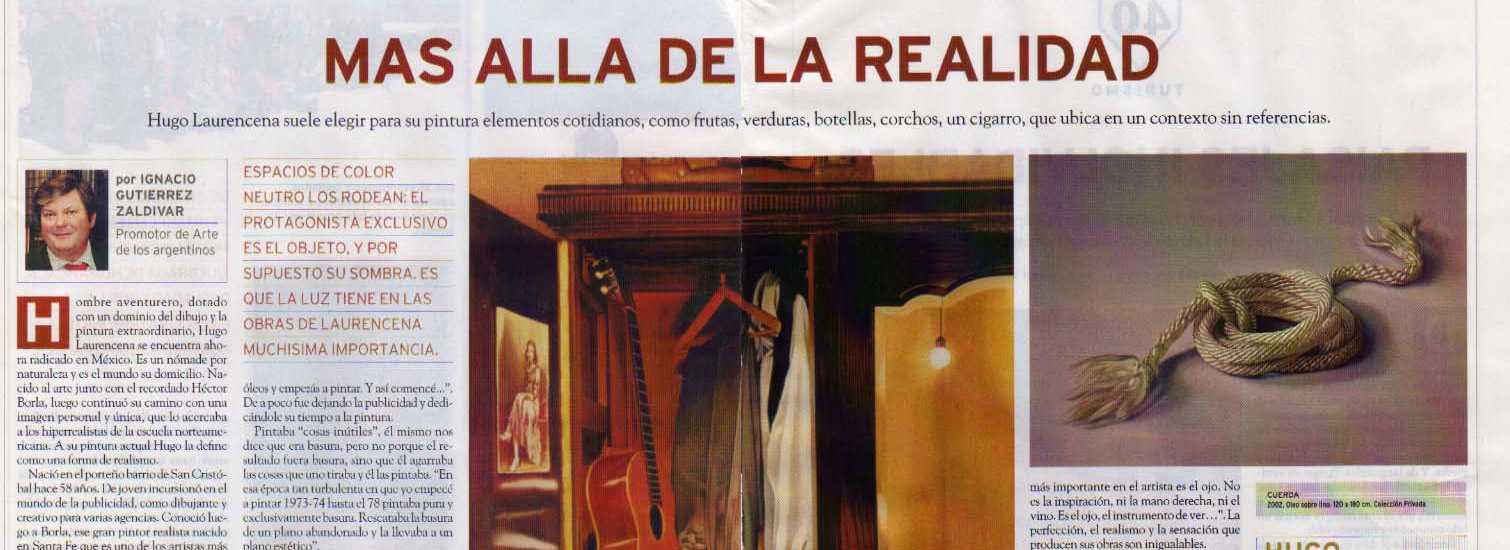
Neutral color spaces surround them: the object is the exclusive protagonist, and of course its shadow. That’s because light matters enormously in Laurencena’s work.
The models he chose for the canvas were quite varied, often everyday things: fruit, vegetables, bottles, corks, a cigar. What was distinctive is that the artist removed them from context — there was no landscape, architectural, or geographic reference around them. What also captivated about his objects is that they were generally painted at an enlarged scale: once an object acquired its own identity, it became “more real,” referenced to nothing but itself.